Modern America runs on software. From energy grids and hospitals to financial systems and defense networks, digital infrastructure depends on complex applications built from thousands of components. Yet most organizations cannot clearly see what is inside the software they deploy. This hidden dependency problem has created one of the most serious national cybersecurity risks today: software supply chain compromise. A Software Bill of Materials (SBOM) offers a practical path toward transparency, accountability, and stronger governance.
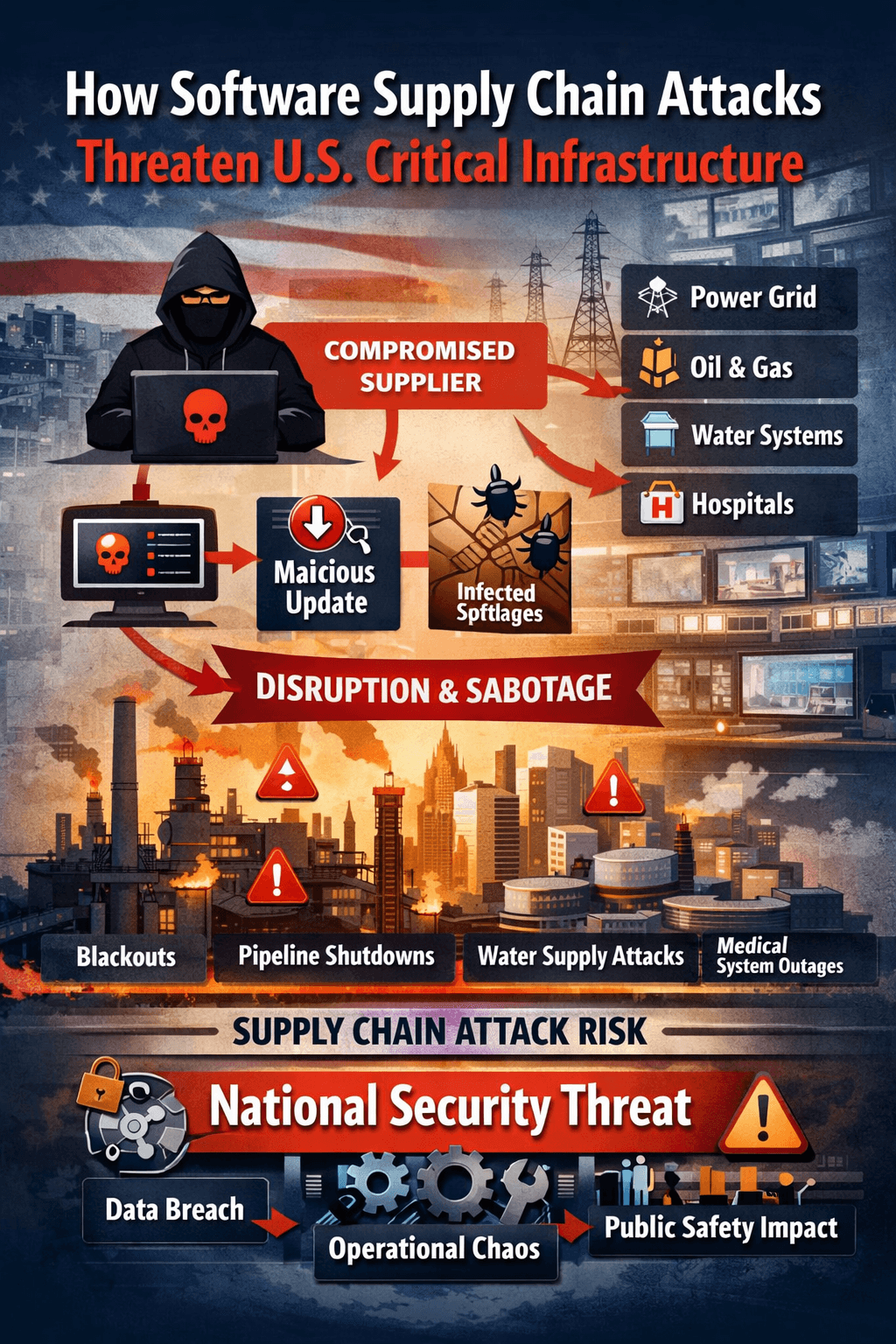
Today’s applications are rarely built from scratch. Developers rely heavily on open-source libraries, third-party modules, APIs, and cloud services. While this accelerates innovation, it also creates deep interdependence. A single vulnerable component can affect thousands of downstream systems. High-profile incidents have demonstrated that attackers increasingly target trusted vendors and upstream providers. Instead of attacking one organization directly, adversaries compromise the supplier and distribute malicious updates or exploit shared dependencies. The result is large-scale exposure across multiple sectors at once.
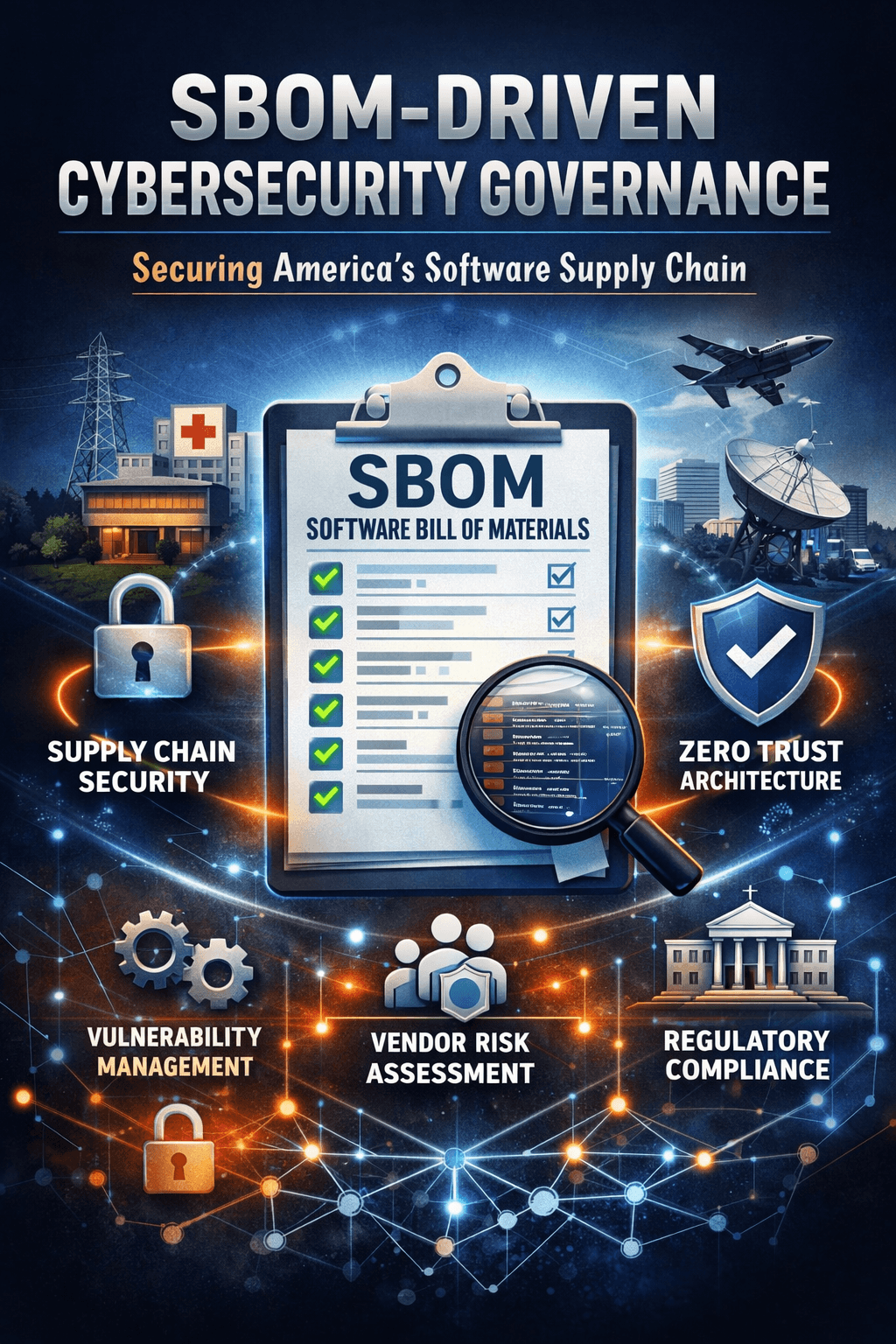
An SBOM (Software Bill of Materials) is a structured inventory of all components within a software product. It identifies: * Component names * Versions * Dependency relationships * Suppliers or origins Similar to a nutrition label on packaged food, an SBOM provides visibility into what is actually inside a digital product. This transparency allows organizations to quickly assess exposure when a vulnerability is disclosed.
Cybersecurity is no longer just a technical concern—it is a national security priority. Critical infrastructure sectors rely on shared software ecosystems. When a widely used component is compromised, the impact can ripple across energy, healthcare, transportation, telecommunications, and financial services. Without component-level visibility, response efforts are slow and uncertain. With SBOM integration, organizations can rapidly determine whether vulnerable components exist in their environments, reducing response time and limiting damage.
Some organizations view SBOM merely as a compliance requirement. This approach limits its value. SBOM becomes transformative when integrated into a broader cybersecurity governance model that includes: 1. Secure Software Development Lifecycle (SSDLC) 2. Continuous vulnerability monitoring 3. Vendor risk management 4. Zero Trust architecture principles 5. Procurement security requirements When embedded into governance structures, SBOM shifts organizations from reactive patching to proactive risk management.
SBOM strengthens supply chain defense in several measurable ways: * Faster vulnerability identification when new CVEs are announced * Improved incident response coordination * Enhanced vendor accountability * Better risk scoring of third-party software * Reduced dwell time for exploitable components The ability to answer the question "Where is this component deployed?" within minutes instead of weeks can significantly reduce operational disruption.
Despite its promise, implementing SBOM at scale presents challenges: * Standardization differences between formats such as SPDX and CycloneDX * Integration complexity within CI/CD pipelines * Managing large volumes of component data * Ensuring accuracy and continuous updates * Organizational resistance to process changes Addressing these barriers requires executive support, automation tooling, and cross-functional collaboration between security, development, procurement, and compliance teams.
Zero Trust assumes that no system, application, or user should be automatically trusted. When combined with SBOM transparency, Zero Trust architecture can restrict the blast radius of compromised components. Even if a trusted vendor is breached, strong identity management, segmentation, least-privilege enforcement, and monitoring can prevent widespread lateral movement. SBOM provides the visibility; Zero Trust provides the containment.
For critical infrastructure operators, SBOM adoption enhances resilience by: * Improving procurement decisions * Supporting regulatory compliance * Enabling faster patch prioritization * Strengthening public-private cybersecurity collaboration In sectors where downtime can impact public safety or economic stability, rapid risk identification is not optional—it is essential.
The next evolution of supply chain defense includes: * AI-assisted vulnerability correlation * Automated SBOM generation during build processes * Continuous real-time component monitoring * Integration with threat intelligence platforms * National-level supply chain transparency initiatives As software ecosystems grow more complex, component-level intelligence will become foundational to cybersecurity strategy.
Software supply chain attacks exploit trust and opacity. SBOM addresses both problems by introducing structured transparency into digital ecosystems. When integrated into cybersecurity governance frameworks, SBOM strengthens national resilience, improves incident response, and reduces systemic risk. Securing America’s digital backbone requires more than perimeter defenses. It requires knowing what we run, verifying what we trust, and governing software supply chains with discipline and accountability. SBOM is not merely documentation—it is a strategic pillar of modern cybersecurity defense.