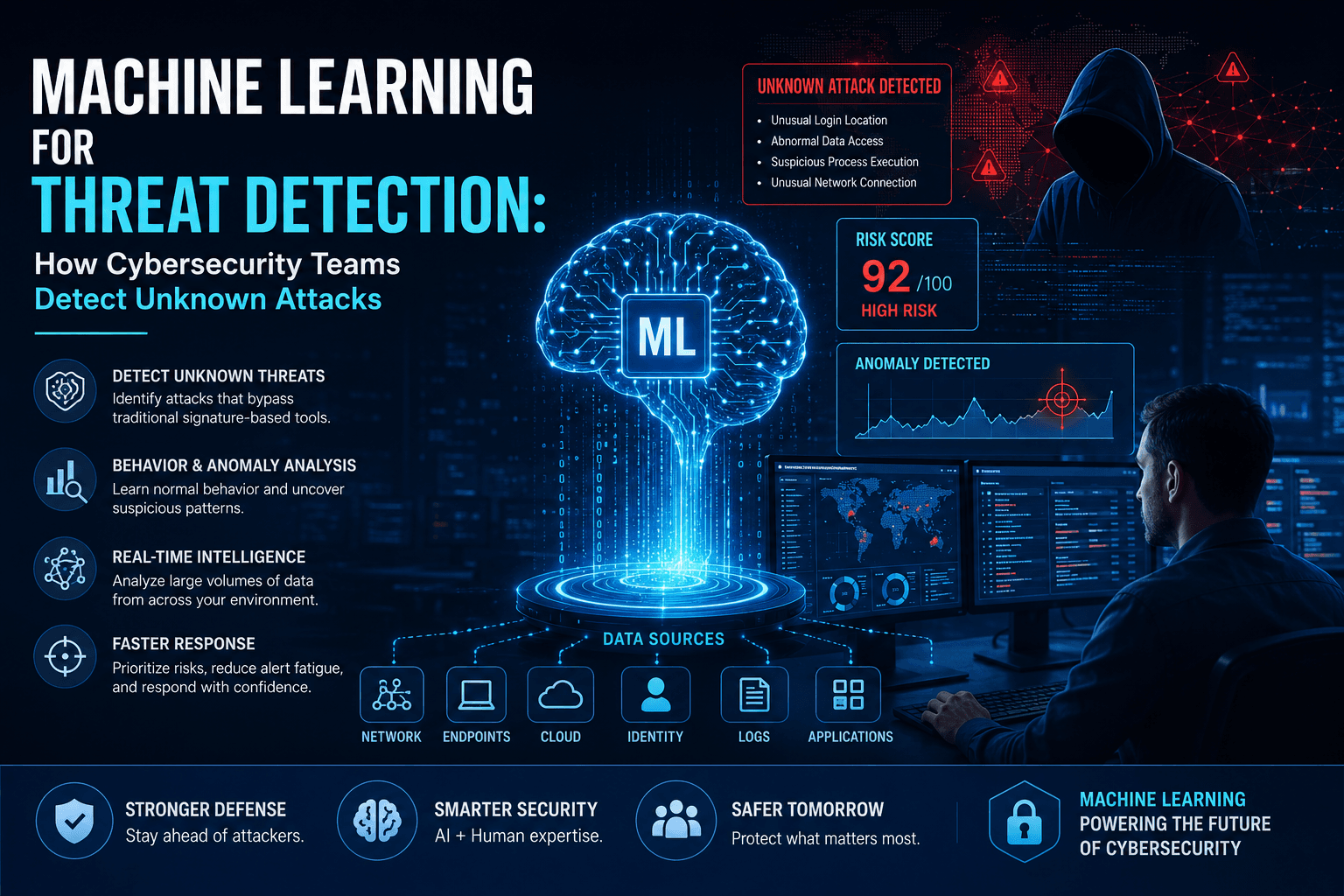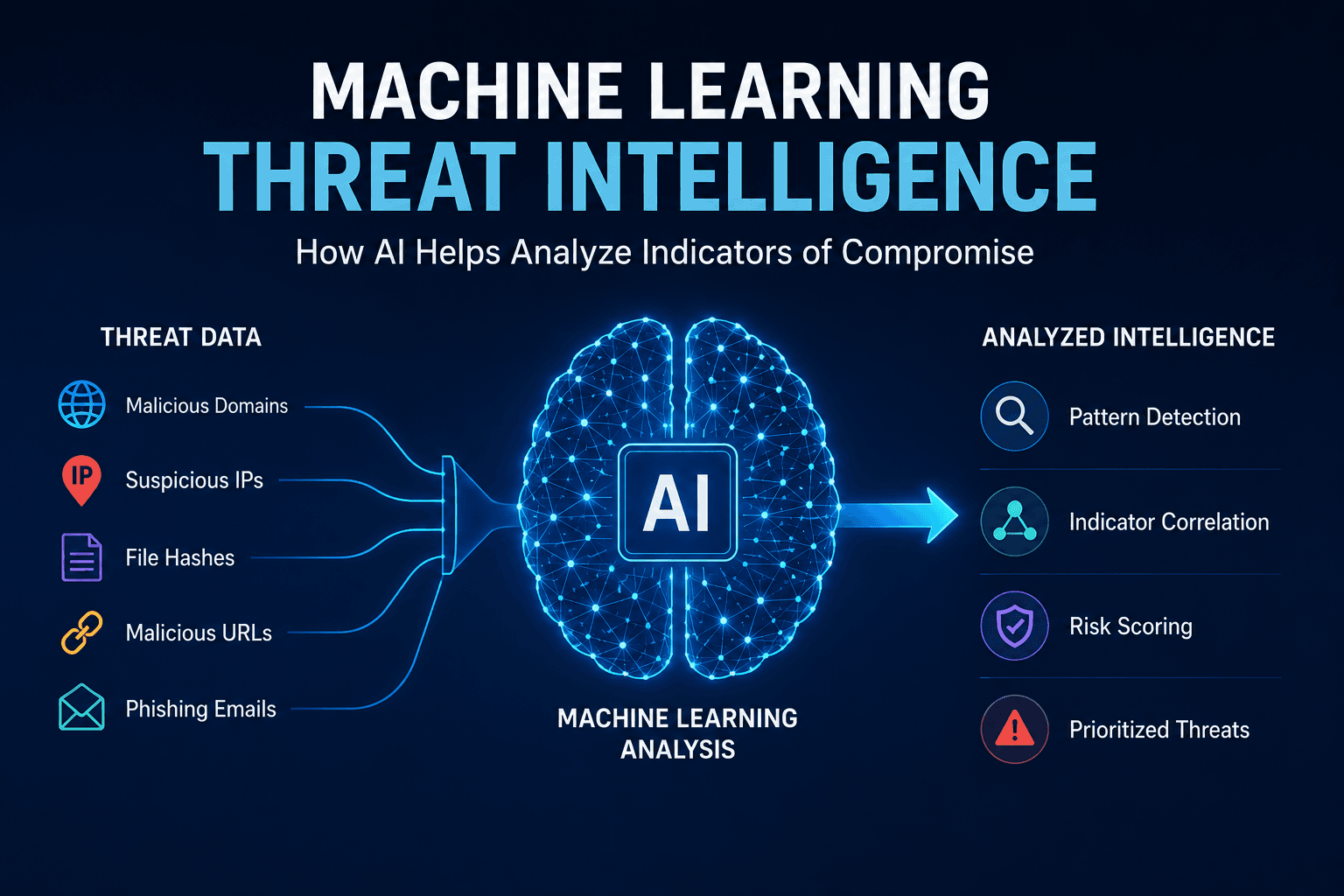
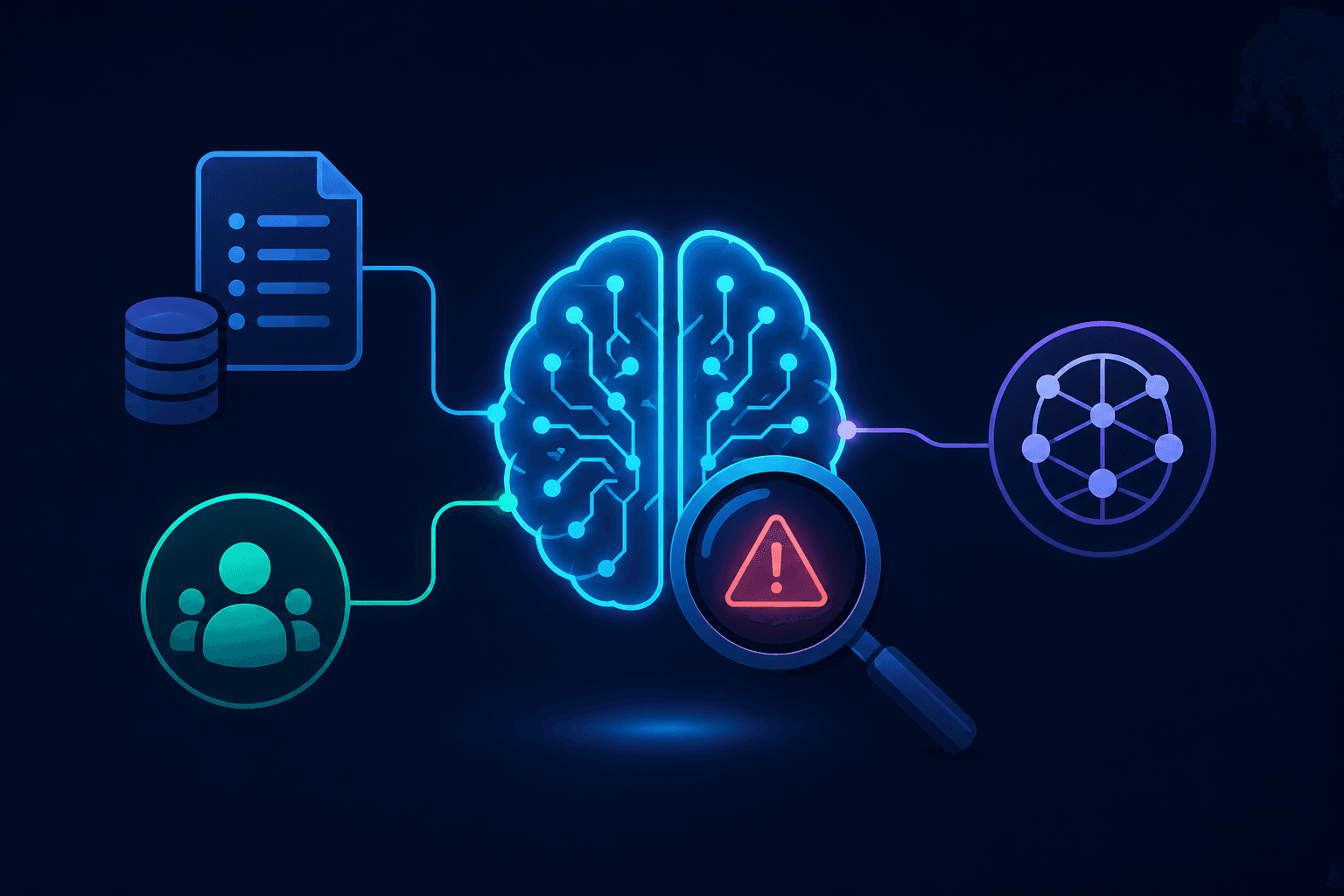
Cybersecurity teams collect a huge amount of data every day. Every login, file access, firewall connection, cloud action, endpoint process, application request, and network session can create a log. These logs contain valuable clues, but the problem is that there are often too many events for analysts to review manually. This is where machine learning security analytics becomes useful. Instead of only depending on fixed rules or known attack signatures, machine learning can analyze large amounts of security data and identify activity that looks unusual. These unusual activities are called anomalies. An anomaly does not always mean an attack is happening. Sometimes unusual behavior is caused by normal business activity, software updates, employee travel, system changes, or new projects. However, anomalies are important because many cyber attacks begin as behavior that does not look normal. A user may log in from a strange location. A server may send data to an unknown destination. An application may generate unexpected errors. A device may suddenly communicate with systems it never used before. Machine learning security analytics helps cybersecurity teams find these suspicious patterns faster. It gives analysts better visibility into logs, users, and network traffic so they can investigate possible threats before serious damage occurs.
Machine learning security analytics is the use of machine learning to analyze cybersecurity data and detect suspicious patterns, risky behavior, and anomalies. Security analytics focuses on understanding what is happening across an organization’s systems. Machine learning improves this process by helping identify behavior that may be difficult to find with manual review or traditional rules. Traditional security tools often use predefined rules. For example, a rule may generate an alert after five failed login attempts, when traffic comes from a blocked country, or when a known malicious file hash appears. These rules are useful, but attackers often avoid obvious actions. They may use valid credentials, legitimate tools, approved cloud services, or slow-moving techniques that do not trigger simple rules. Machine learning security analytics works differently. It can learn normal behavior and detect when activity changes. For example, if an employee usually logs in from California during business hours but suddenly logs in from another country at midnight and downloads confidential files, machine learning can flag the behavior as unusual. The goal is not to replace security analysts. The goal is to help analysts find the right events faster. Machine learning highlights suspicious activity so analysts can review the context and decide whether the activity is harmless, risky, or malicious.
Anomaly detection is important because many attacks do not look like attacks at first. Cybercriminals often try to blend into normal activity. They may use real usernames and passwords, trusted applications, normal network protocols, and common administrative tools. For example, if an attacker steals an employee password, the login may appear successful and legitimate. A basic security system may not block the login because the correct credentials were used. However, the behavior after login may be suspicious. The account may access unusual files, connect from a new device, or perform actions outside the user’s normal role. Anomaly detection helps identify this type of behavior. Instead of asking only whether an action is allowed, machine learning asks whether the action is normal. This is important for detecting compromised accounts, insider threats, malware activity, data exfiltration, cloud abuse, and lateral movement. In many cases, early signs of attack appear as small anomalies across different systems. Machine learning security analytics can connect these signals and help analysts investigate faster.
Machine learning detects anomalies by learning patterns from security data. The system studies historical activity and builds a baseline of normal behavior. Then it compares new activity against that baseline. When something appears significantly different, the system can generate an alert or risk score. For example, a machine learning model may learn that a database server usually communicates with internal applications during business hours. If that server suddenly sends a large amount of data to an unknown external Internet Protocol address at 2:00 AM, the behavior may be flagged as unusual. The same approach can be used for users, devices, applications, and cloud accounts. The model may learn typical login times, normal file access patterns, common application usage, expected traffic volumes, and usual destinations. When behavior changes, machine learning helps identify the difference. Machine learning does not need every anomaly to match a known attack signature. This makes it useful for finding unknown or emerging threats. However, analysts still need to investigate the alert because unusual does not always mean malicious.
Security logs are one of the most important data sources for machine learning security analytics. Logs record activities across systems, applications, networks, endpoints, identity platforms, and cloud environments. These records can reveal signs of attack if they are analyzed correctly. Machine learning can detect abnormal patterns in logs such as repeated failed logins, unusual administrative actions, unexpected service restarts, strange application errors, rare command execution, abnormal access to sensitive files, or unusual cloud configuration changes. For example, an administrator account may normally be used only during business hours. If that account suddenly performs several privileged actions late at night from a new location, machine learning can flag the behavior for investigation. Another example involves application logs. A web application may normally receive a stable pattern of requests. If the application suddenly receives unusual request types, repeated errors, or suspicious input patterns, machine learning can help identify possible probing or attack attempts. Log anomaly detection is useful because many attacks leave traces across different systems. A single log entry may not look serious, but multiple unusual events together may tell a stronger story.
User behavior is one of the most valuable areas for machine learning security analytics. Many cyber attacks involve user accounts, especially stolen credentials. Attackers often try to look like normal users, but their behavior may still be different from the real user’s normal activity. Machine learning can analyze user behavior such as login times, login locations, device usage, application access, file downloads, permission changes, and data transfer activity. When a user behaves differently from the established pattern, the system can create a risk signal. For example, a finance employee may normally access payroll systems and financial reports. If the same account suddenly accesses engineering documents, downloads large files, and logs in from an unfamiliar device, the activity may be suspicious. Machine learning can also compare users with peer groups. If most users in a department access similar systems, but one user begins accessing unrelated systems, the difference may be worth investigating. This type of analysis helps detect compromised accounts, insider threats, privilege misuse, and unauthorized access. It is especially useful because traditional tools may not alert when a user technically has permission to access a system.
Network traffic can reveal important signs of cyber threats. Attackers may communicate with command-and-control servers, move laterally, scan internal systems, or transfer stolen data. However, modern networks generate large amounts of traffic, making manual review difficult. Machine learning security analytics can learn normal network behavior and detect unusual patterns. These patterns may include unexpected traffic volume, rare destination addresses, unusual ports, abnormal protocol usage, strange communication timing, or connections between systems that do not normally interact. For example, a workstation that normally communicates with email, browser, and business applications may suddenly connect to multiple internal servers. This may indicate lateral movement. A server that normally sends small amounts of data may suddenly upload a large amount of data to an unknown external destination. This may indicate data exfiltration. Machine learning can also identify command-and-control behavior. Some malware communicates with external servers in regular patterns. Even if the destination is not already known as malicious, the traffic pattern may look suspicious. Network anomaly detection gives analysts another way to find hidden threats that may not be detected by signature-based tools.
Machine learning security analytics can be used in many real-world cybersecurity scenarios. One example is detecting impossible travel. If a user logs in from California and then logs in from another country a few minutes later, the system may flag the activity as suspicious. While travel or virtual private network use may explain some cases, the alert can help detect account compromise. Another example is detecting abnormal data access. If an employee suddenly downloads hundreds of files from a sensitive folder, machine learning can identify the activity as unusual compared to normal behavior. A third example is detecting unusual endpoint behavior. If a device suddenly runs rare scripts, disables security services, or creates suspicious processes, the behavior may indicate malware or attacker activity. A fourth example is detecting abnormal cloud activity. If a cloud account creates new access keys, disables logging, changes security rules, and accesses storage from a new region, machine learning can connect these actions into a suspicious pattern. These examples show why machine learning is useful. It can find patterns across different systems and help analysts investigate before a small issue becomes a major incident.
Machine learning security analytics provides several benefits for cybersecurity teams. First, it helps detect unknown threats. Because machine learning can identify abnormal behavior, it may detect attacks that do not match known signatures. Second, it improves speed. Security teams do not have time to manually review every log, user event, or network connection. Machine learning can quickly process large volumes of data and highlight suspicious activity. Third, it reduces alert fatigue. Analysts often receive too many alerts, many of which are low priority. Machine learning can help prioritize alerts based on risk and context. Fourth, it improves visibility. By analyzing logs, users, and network traffic together, machine learning gives security teams a broader view of what is happening across the environment. Fifth, it supports proactive security. Instead of waiting for a confirmed attack, analysts can investigate unusual behavior early. Finally, machine learning security analytics helps organizations scale their security operations. As businesses grow, security data grows too. Machine learning helps teams manage this complexity more effectively.
Machine learning security analytics is powerful, but it is not perfect. One limitation is false positives. Not every anomaly is malicious. A user may travel, change job roles, work late, or access a new system for a legitimate reason. Analysts must review the context before taking action. Another limitation is false negatives. Attackers may move slowly, imitate normal behavior, or use legitimate tools to avoid detection. Machine learning may not catch every threat. Data quality is also a major challenge. Machine learning depends on accurate and complete data. If important logs are missing or poorly formatted, the model may not detect important anomalies. Explainability is another concern. Analysts need to understand why an event was flagged. If the machine learning system only provides a risk score without explanation, investigation becomes harder. Machine learning models also need maintenance. Normal behavior changes over time as organizations add new tools, hire employees, change processes, or move systems to the cloud. Models must be reviewed and updated so they remain accurate. Because of these limitations, machine learning should support human analysts, not replace them.
Organizations can get better results from machine learning security analytics by following practical best practices. First, collect the right data. Logs from endpoints, identity systems, cloud platforms, firewalls, applications, and network tools should be included where possible. More relevant data gives the model better context. Second, define what normal behavior looks like. Machine learning works best when it can compare current behavior against historical patterns. Third, combine machine learning with traditional security tools. Rules, signatures, threat intelligence, endpoint protection, and access controls are still important. Fourth, make alerts explainable. Analysts should be able to see why an event was considered unusual, what systems were involved, and what behavior changed. Fifth, tune models over time. Organizations should review false positives, missed detections, and changes in normal activity. Sixth, connect analytics to incident response. Detection is useful only when teams can investigate and respond quickly. Alerts should support clear workflows, escalation paths, and response actions. Finally, keep human analysts involved. Machine learning can identify suspicious behavior, but analysts must validate the findings and make final decisions.
The best security analytics programs combine machine learning with human expertise. Machine learning is strong at processing large amounts of data and identifying unusual patterns. Human analysts are strong at understanding context, business operations, attacker behavior, and risk. For example, a machine learning system may flag unusual access to sensitive files. An analyst can investigate whether the user recently changed roles, whether the access was part of a project, or whether the account may be compromised. This partnership is important because cybersecurity decisions often require judgment. Blocking an account, isolating a device, or escalating an incident can affect business operations. Analysts need enough context to make the right decision. Machine learning security analytics gives analysts better starting points. It helps them spend less time searching for suspicious activity and more time investigating meaningful risks.
Machine learning security analytics helps cybersecurity teams detect anomalies in logs, users, and network traffic faster. This is important because modern cyber attacks often hide inside normal-looking activity. Attackers may use valid credentials, legitimate tools, cloud services, and slow-moving techniques to avoid traditional detection. By learning normal behavior and identifying unusual patterns, machine learning can help detect compromised accounts, insider threats, malware behavior, lateral movement, suspicious cloud activity, and data exfiltration. It gives analysts better visibility and helps prioritize investigation leads. However, machine learning is not a complete solution by itself. It can generate false positives, miss carefully hidden attacks, and depend heavily on data quality. Human analysts remain essential for validation, investigation, and response decisions. When used correctly, machine learning security analytics becomes a powerful support tool for modern cybersecurity operations. It helps organizations analyze large amounts of data, find suspicious behavior faster, and strengthen their overall security posture.