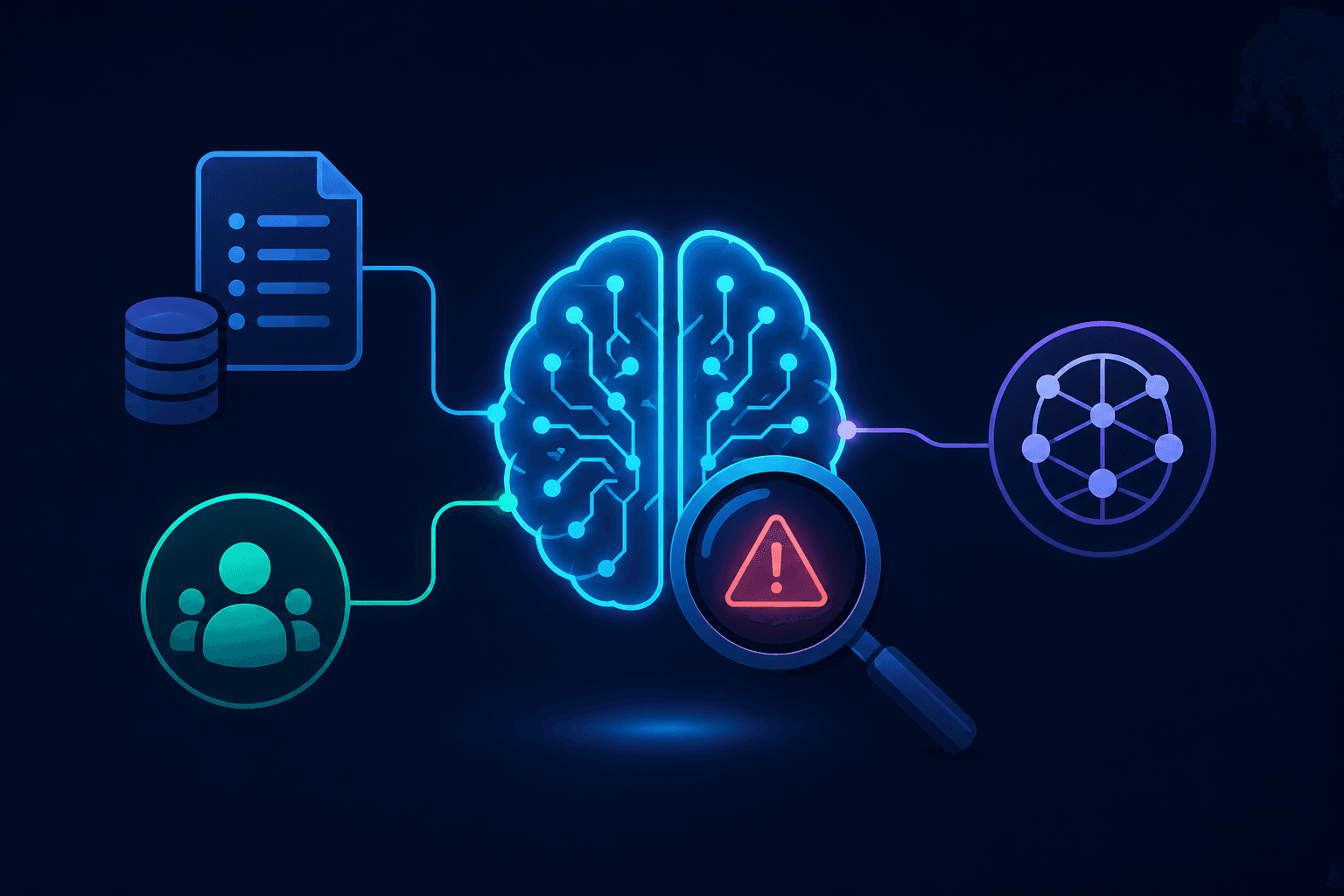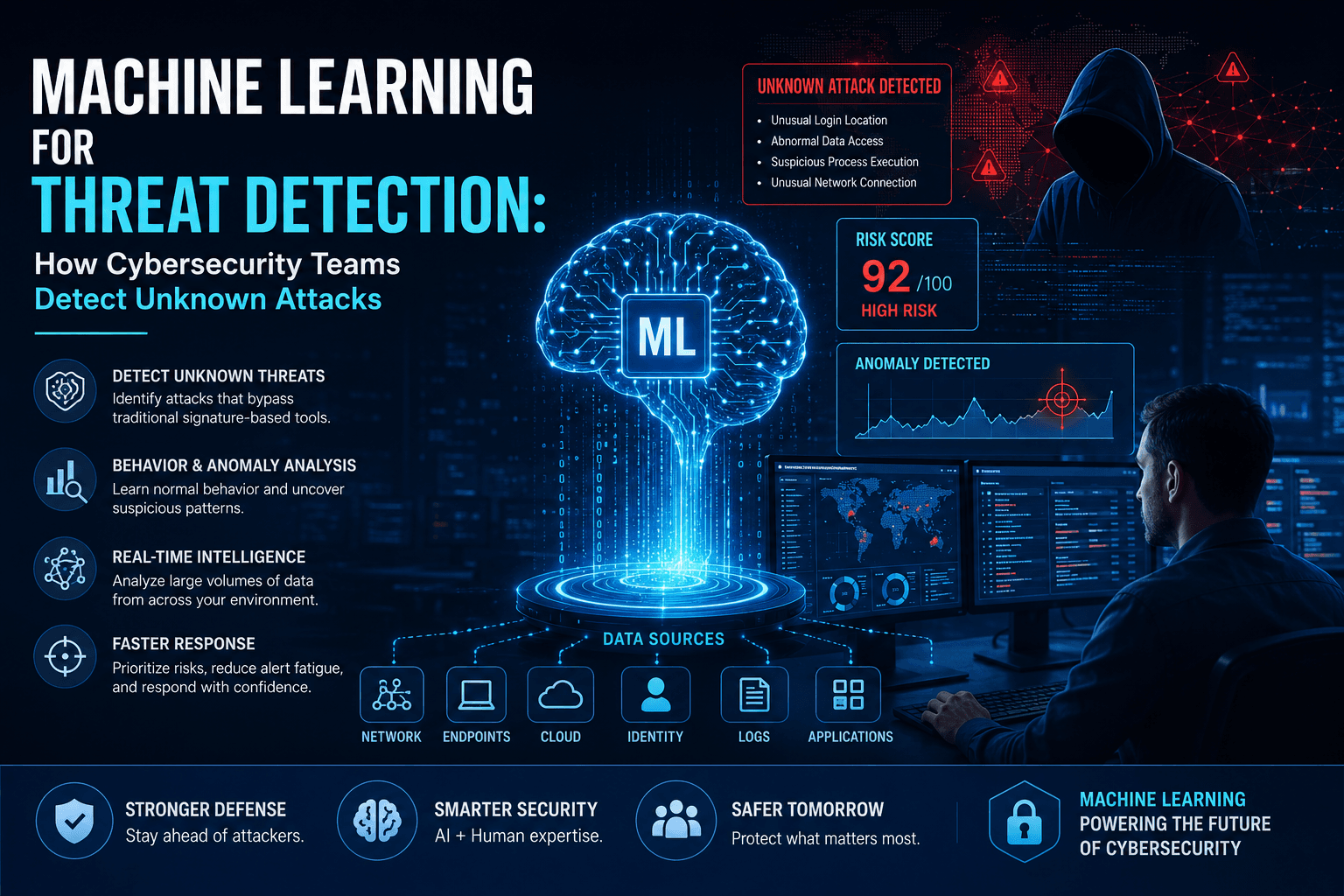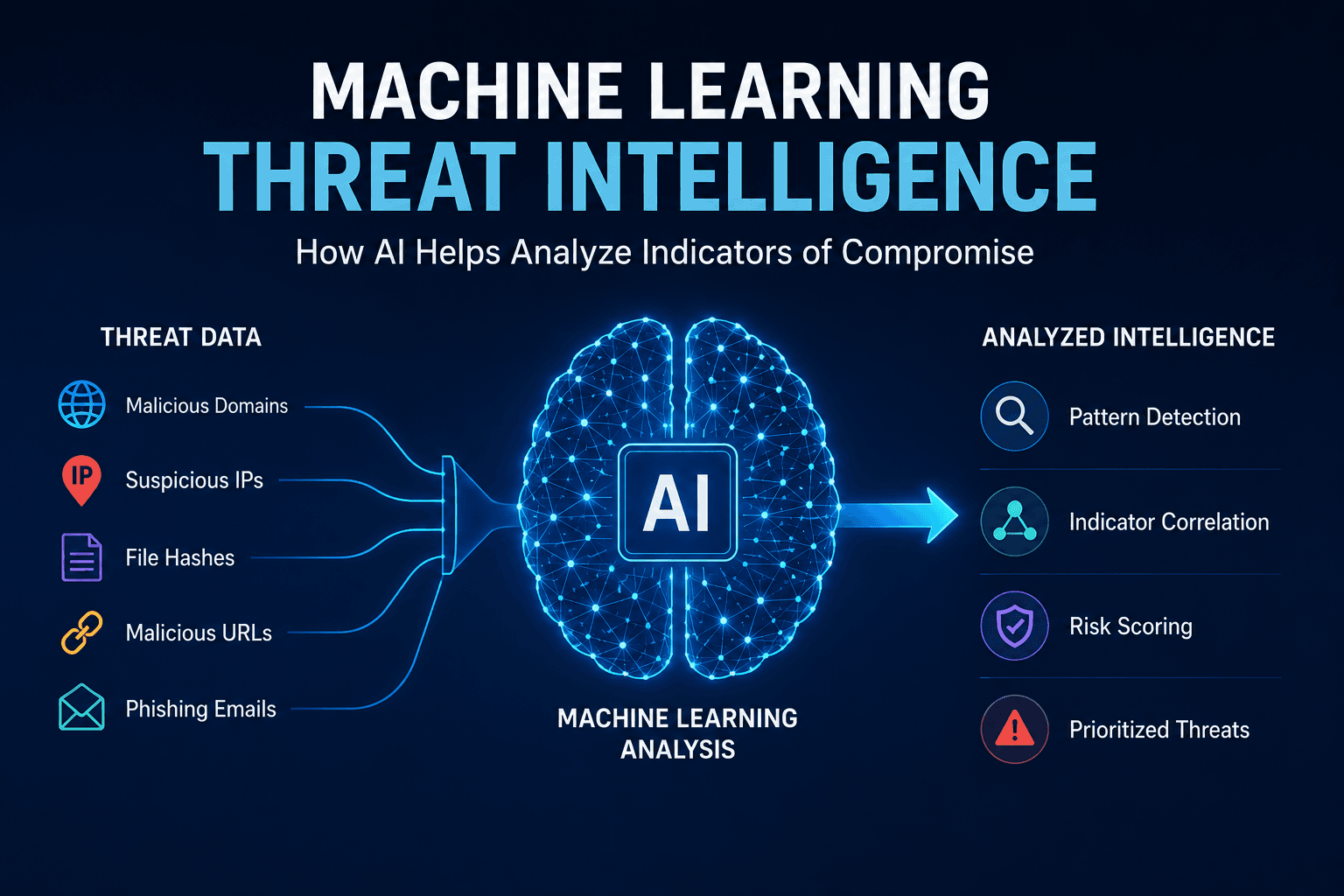
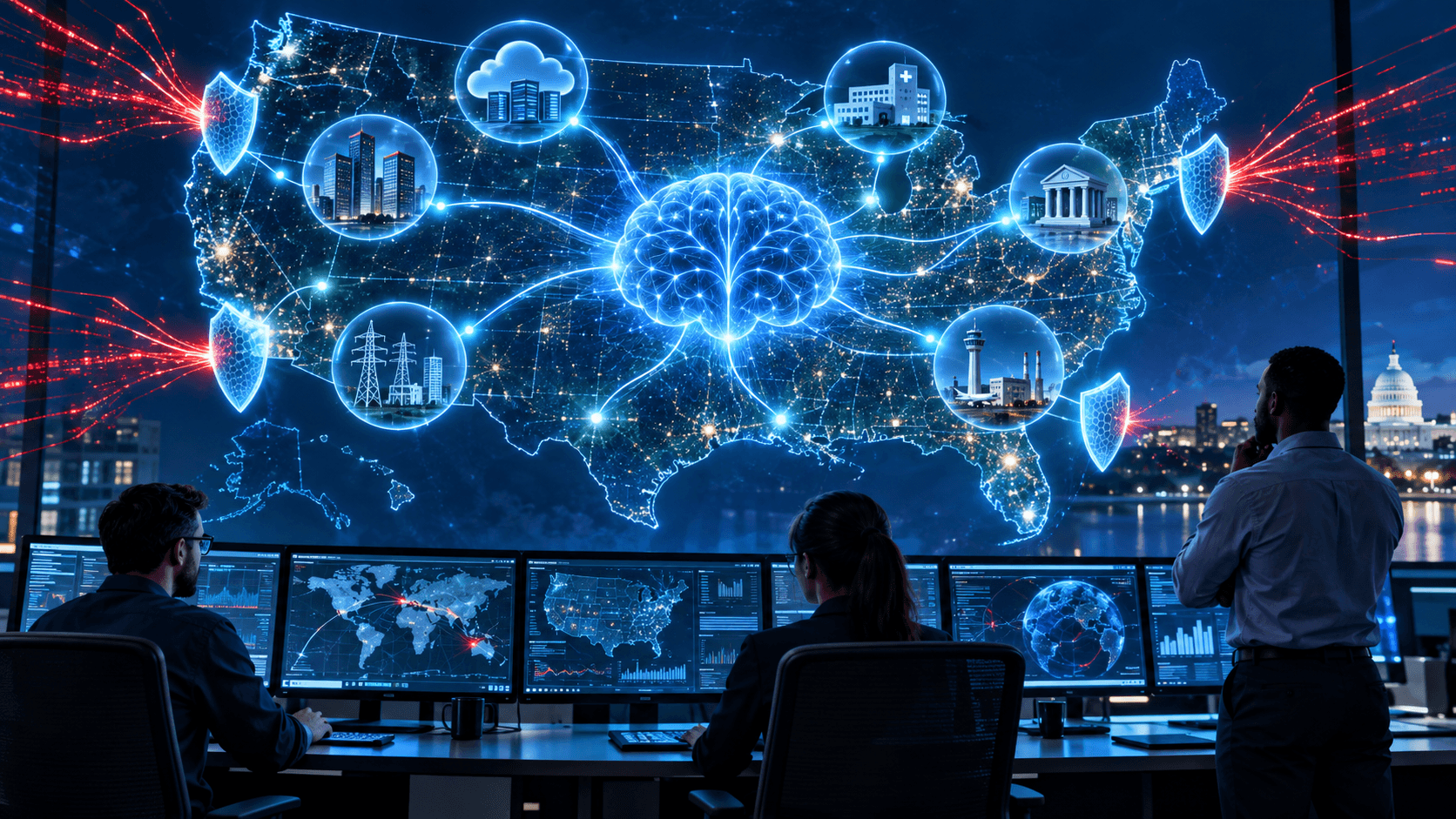
Artificial intelligence is becoming part of everyday cybersecurity work across the United States. Banks use AI models to notice unusual account activity. Hospitals use them to help protect patient systems. Retailers use them to identify payment fraud and suspicious logins. Technology companies use AI to review code, investigate security alerts, and protect cloud services. Federal agencies are also studying, testing, and deploying AI for cyber defense while developing guidance for safer use. This change is happening because modern organizations produce more security data than people can examine manually. A single business may collect alerts from laptops, servers, firewalls, email, identity systems, software repositories, mobile devices, and several cloud platforms. Security analysts must decide which events are normal, which are mistakes, and which may be part of an attack. AI models can process this information quickly, find relationships across systems, and present the most important activity for human review. However, AI cybersecurity is not an automatic shield. Models can make mistakes, inherit bias from their data, expose confidential information, or be manipulated by attackers. Criminals also use generative AI to improve phishing messages, impersonate trusted people, automate research, and scale older forms of fraud. The same technology can strengthen defenders and increase the speed of attackers. This article explains how people are using AI models in cybersecurity in the USA, which model types support common security tasks, how different industries apply them, what risks organizations must manage, and how AI is changing cybersecurity jobs. It also provides practical cybersecurity tips for businesses, professionals, students, and individuals who want the benefits of AI without placing too much trust in an unverified system.
What is cybersecurity? Cybersecurity is the practice of protecting computers, networks, software, cloud services, accounts, devices, and data from unauthorized access, damage, disruption, theft, and misuse. It includes technology, but it is not only a technical subject. Strong cybersecurity also depends on trained people, clear policies, secure business processes, incident planning, vendor management, and leadership decisions. A cybersecurity program usually works across several connected areas. Identity security controls who can sign in and what each person can access. Network security monitors connections between devices and systems. Endpoint security protects laptops, servers, and mobile devices. Application security finds weaknesses in software. Cloud security protects hosted workloads, storage, databases, and administrative accounts. Data security focuses on the confidentiality, integrity, and availability of information. Incident response prepares an organization to contain an attack, remove the threat, recover operations, and learn from the event. AI does not replace these foundations. Instead, an AI model can improve a specific activity inside them. For example, a model may estimate whether a login is risky, classify an email as phishing, summarize a security incident, find unusual network behavior, or suggest a safer code change. Firewalls, multifactor authentication, backups, patches, access controls, encryption, and human review are still necessary. This distinction matters because the phrase cybersecurity AI is sometimes presented as if one intelligent tool can protect an entire company. In reality, security comes from layers of controls. AI is one powerful layer that can help people detect patterns, prioritize work, and respond faster when it is used with reliable data and well-designed safeguards.
An AI model is a system trained or designed to identify patterns and produce an output from new information. The output might be a classification, prediction, risk score, summary, recommendation, generated query, or suggested action. Cybersecurity teams use several model families rather than one universal form of AI. Supervised machine learning learns from labeled examples. A security team might train a model with emails marked as malicious or safe, then use it to classify new messages. Unsupervised learning looks for structure without depending on complete labels. It is useful for anomaly detection because organizations rarely possess a perfect list of every possible attack. A model can establish a baseline for normal user, device, or network behavior and highlight important differences. Deep-learning models can analyze complicated data such as executable files, network sequences, images, voice, and large collections of events. Natural-language models process human language and code. A large language model can explain an alert, summarize threat intelligence, create a detection query, translate technical details, or help an analyst prepare an incident report. Graph models examine relationships among users, devices, applications, permissions, and transactions. They can uncover a suspicious path that would be difficult to see in a flat list of alerts. Organizations also use rules and threat intelligence alongside AI. A known malicious file hash is often best handled by a precise rule, while an unfamiliar pattern may benefit from a model. The most dependable approach combines deterministic controls, statistical models, generative AI, and expert judgment. The model helps interpret complexity, but security professionals remain responsible for verifying evidence and deciding what action is safe.
AI cybersecurity is growing in the United States because organizations face a difficult combination of high data volume, cloud complexity, rapid software development, and persistent attacks. Employees can work from different states or countries, use personal and corporate devices, and connect to many software-as-a-service applications. A security operations center may receive thousands of alerts while a smaller business may not have a full-time security analyst at all. AI can reduce some of this pressure. Models work continuously, evaluate large event streams, and rank items according to risk. Generative tools can convert technical evidence into understandable summaries. Automation can collect related events before an analyst begins an investigation. These abilities are attractive to U.S. companies that want faster response without asking every employee to become a security expert. The U.S. government also treats the intersection of AI and cyber risk as a national issue. The Cybersecurity and Infrastructure Security Agency has described goals that include using AI to support its mission, assuring AI systems, protecting critical infrastructure from malicious AI use, collaborating with partners, and expanding workforce expertise. The National Institute of Standards and Technology has organized its Cyber AI work around securing AI systems, conducting AI-enabled cyber defense, and thwarting AI-enabled attacks. The National Security Agency created an Artificial Intelligence Security Center to advance secure AI adoption and counter vulnerabilities affecting national security systems and the defense industrial base. These activities show that AI in security is not limited to a single cybersecurity company or a temporary product trend. It is becoming part of national guidance, critical-infrastructure planning, enterprise security platforms, software engineering, professional training, and public cybersecurity news. At the same time, responsible adoption requires proof that a model improves outcomes instead of merely producing impressive text.
One of the most common uses of AI models in U.S. cybersecurity is analyzing logs. Applications, cloud services, firewalls, endpoints, identity providers, and network devices record activity every second. Traditional security information and event management systems collect this information and apply rules. AI adds behavioral analysis, correlation, and prioritization. A model can learn that an employee normally signs in from California on a managed laptop during daytime hours. A new login from an unfamiliar device, followed by an unusual administrative action and a large file download, may receive a high risk score. Each event alone could be legitimate. Their combination is more concerning. AI can connect the sequence and place it near the top of an analyst's queue. Models also support entity behavior analytics. Instead of viewing every alert independently, the system creates a changing picture of each user, device, service account, and application. It can detect rare commands, unexpected process relationships, unusual data movement, or access that differs from a peer group. This helps reveal compromised credentials, insider risk, lateral movement, and slow attacks that avoid simple thresholds. Good implementations do not automatically declare every anomaly malicious. Travel, software updates, new employees, acquisitions, and seasonal business changes can all create unusual behavior. Security teams tune the model, add business context, measure false positives, and let analysts provide feedback. The purpose is to narrow a large field of data into a smaller set of defensible investigation leads.
Email remains a major entry point for cybercrime, so U.S. organizations use AI models to inspect message content, sender behavior, links, attachments, and communication patterns. A modern email-security model can identify language associated with urgency, payment changes, credential requests, or executive impersonation. It can also notice when a sender suddenly communicates in a way that differs from an established relationship. Computer-vision and audio models are increasingly relevant because scams are no longer limited to text. Attackers can create convincing images, recorded voices, and video impersonations. The FBI has warned that malicious actors use AI to improve targeted phishing and to expand the speed, scale, and automation of existing schemes. It has also warned about AI-generated voices and videos used to impersonate trusted or high-profile people. Defenders therefore combine content analysis with identity checks, device signals, domain reputation, and business procedures. A model may quarantine a suspicious email or place a warning beside it, but people still need a verification process. A finance employee should confirm a changed bank account through a known phone number, not the number supplied in the message. An employee receiving an urgent voice request from an executive should use a second trusted channel. AI can also help security-awareness teams create realistic training exercises. Organizations can generate role-specific examples for finance, human resources, developers, and executives. Such training must be controlled so that it does not expose real credentials, embarrass employees, or normalize unsafe behavior. The strongest defense combines AI filtering, authentication controls, employee training, and verification rules for sensitive actions.
Endpoint and network products have used machine learning for years. On a laptop or server, models can study file characteristics, process trees, command lines, memory behavior, and connections. This allows detection to move beyond a list of known malware signatures. A previously unseen file may be blocked because its structure or behavior resembles malicious activity. Network models examine traffic volume, timing, protocol usage, destinations, and relationships between systems. They may identify an internal scan, command-and-control communication, unexpected encrypted traffic, or a server sending far more information than usual. Models can also detect beaconing, in which malware contacts an external system at regular intervals. These tools are useful in large American enterprises with thousands of endpoints, but they also benefit smaller organizations through managed security services. A local business can use cloud-managed endpoint protection without building its own model. The vendor trains and operates the detection system, while the business or its service provider reviews alerts and responds. Automatic containment can reduce damage, but it needs limits. Isolating a workstation is usually less risky than shutting down a production medical, manufacturing, or public-safety system. Organizations should define which response actions AI may recommend, which it may perform after policy checks, and which always require human approval. The more serious the operational consequence, the stronger the need for confirmation, logging, and a tested recovery path.
U.S. businesses increasingly run software and store data across multiple cloud platforms. AI models help teams understand cloud activity by analyzing sign-ins, application programming interface calls, configuration changes, storage access, permissions, and workload behavior. A model may flag a new access key created by a dormant account, a database opened to the internet, or a service identity that suddenly requests privileges it has never needed. Cloud security also uses AI for data discovery and classification. Models can recognize sensitive material such as financial records, health information, source code, or personal identifiers even when the data is stored in an unexpected location. Once information is classified, policies can limit sharing, require encryption, or notify a security team. Generative AI is helping analysts query complicated cloud environments in ordinary language. Instead of remembering every product-specific search syntax, an analyst can describe the behavior under investigation and ask the assistant to create a query. The analyst must still inspect the query, confirm the time range and data sources, and validate the results. A confident explanation is not proof that the query is correct. AI creates a new cloud-security concern as well. Employees may paste proprietary information into a public chatbot, applications may grant an AI agent excessive access, or retrieval systems may reveal documents to the wrong user. Organizations need approved tools, data-loss controls, strong identity management, model and prompt logging, and clear rules about which data may enter an AI system.
Software teams are using AI to review source code, explain security findings, generate tests, and suggest repairs. Static analysis may produce a long list of possible problems. An AI assistant can add context by identifying the affected function, explaining how the weakness might be reached, and proposing a patch for developer review. Models can also help create test cases for authentication, input validation, access control, and error handling. The potential goes beyond assistance. DARPA's AI Cyber Challenge demonstrated autonomous cyber reasoning systems that could examine real software, discover vulnerabilities, prove that flaws existed, and generate patches. In the 2025 final competition, the systems analyzed more than 54 million lines of code, found synthetic and previously unknown real-world vulnerabilities, and produced patches. This does not mean all AI-generated fixes are safe, but it provides strong evidence that AI can support vulnerability discovery at meaningful scale. U.S. companies are also applying models to software supply-chain risk. AI can help prioritize vulnerable packages by considering whether the affected component is actually reachable, whether an exploit is known, how critical the application is, and whether compensating controls exist. It can summarize a software bill of materials and connect components with vulnerability intelligence. Every generated patch still needs tests, peer review, and controlled deployment. Models can introduce a new bug, misunderstand business logic, remove a necessary control, or recommend a package that creates another dependency risk. AI should shorten the path from finding to understanding and repairing a flaw, while secure development practices provide the evidence that the repair works.
Security analysts spend considerable time collecting evidence and preparing summaries. Generative AI can reduce this repetitive work. It can assemble related alerts, explain a process tree, summarize threat intelligence, create a timeline, translate a technical finding for leadership, and draft a report. Analysts can then spend more time validating the attack, defining its scope, and choosing a response. Commercial platforms in the United States now offer security copilots for incident response, threat hunting, intelligence gathering, and security-posture management. These systems often use a large language model together with organization-specific security data and product integrations. The model is most useful when it can ground its answer in actual alerts, identities, assets, and logs rather than relying only on general internet knowledge. During an incident, an analyst might ask which devices contacted a suspicious address, which user first executed a file, what credentials were used afterward, and what containment steps are appropriate. The assistant can create queries and organize results. A human should confirm the evidence before disabling accounts, blocking production traffic, deleting files, or making a legal or regulatory statement. Organizations should measure whether AI actually improves mean time to detect, mean time to contain, investigation quality, and analyst workload. Faster text generation by itself is not a security outcome. A useful AI deployment produces quicker, more accurate decisions while keeping an audit trail of the evidence, model output, human approval, and action taken.
Identity has become a central security boundary because employees and customers reach services from many locations and devices. AI models help calculate risk during login and after access is granted. Signals may include device health, network location, typing behavior, login time, previous activity, transaction history, and the sensitivity of the requested resource. A bank may use models to identify a payment that differs from a customer's normal behavior. An online retailer may score a new account using device, order, and payment patterns. An employer may detect impossible travel, mass downloads, repeated access denials, or privilege use that differs from a person's role. The system may request another authentication factor, delay a transaction, restrict access, or send the case for review. Graph-based analysis is especially helpful for fraud and identity investigations. A suspicious account may appear harmless when viewed alone but become important when connected to reused devices, shared addresses, mule accounts, or previously confirmed fraud. AI can rank these relationships for an investigator. Risk scoring must be governed carefully. Poor data can create unfair treatment, while a model that cannot explain its result may be difficult to challenge. Organizations should test performance across relevant user groups, minimize collected data, provide an appeal or manual-review path, and avoid treating one score as unquestionable truth. Security and privacy should support each other: collecting every possible signal is not automatically the safest design.
Threat intelligence teams collect reports, technical indicators, malware descriptions, vulnerability information, and observations from internal investigations. Natural-language models can summarize these materials, extract entities, compare reports, and connect an external campaign with activity inside an organization. This reduces the time required to move from cybersecurity news to a testable hunting question. For example, a report may describe a threat actor using a particular remote-management tool, file path, and sequence of commands. An AI assistant can convert the description into queries for endpoint or log platforms. A hunter then checks the syntax, runs the queries, evaluates the results, and improves the detection. Models can also translate between query languages when an organization uses several tools. AI helps with prioritization as well. A vulnerability headline may attract broad attention, but its importance depends on whether the organization runs the affected product, whether the vulnerable component is exposed, whether exploitation is occurring, and what business service could be disrupted. A model can combine inventory and intelligence to recommend what deserves immediate review. Threat intelligence changes quickly, so source quality and time matter. Teams should separate confirmed facts from vendor claims, rumors, and model inference. Cybersecurity news should lead to verification, not panic. A good AI output identifies the underlying source, marks uncertainty, and allows an analyst to trace every important claim back to current evidence.
Different sectors apply cybersecurity AI according to their risks. Financial institutions use models for transaction fraud, account takeover, anti-money-laundering investigations, email security, and insider-risk monitoring. Hospitals and health systems use AI-supported endpoint detection, identity monitoring, medical-device visibility, and protection of patient data. Because availability can affect patient care, automated response must be designed with clinical operations in mind. Retail and e-commerce companies use AI to detect payment fraud, fake accounts, bot activity, credential stuffing, return abuse, and suspicious orders. Manufacturers and energy providers analyze operational networks and equipment behavior, although safety-critical environments often require conservative response rules. Universities use AI to protect research, student accounts, cloud collaboration, and large, open networks. State and local governments may use managed AI security services because internal teams and budgets are limited. Technology companies embed models into cloud platforms, identity products, email services, code-development tools, and security operations. Federal agencies use AI in many mission areas and publish inventories and guidance for responsible use. CISA, NIST, NSA, the FBI, and DARPA each address different parts of the problem, including defensive use, secure AI systems, malicious use, public warnings, and automated vulnerability discovery. A small business does not need to train a foundation model. Most organizations consume AI through a security product or managed service. The important questions are what data the product uses, where that data goes, how performance is measured, which actions can be automated, and how humans can review or reverse a decision.
Defenders are not the only people using AI. Criminals can use language models to draft believable phishing messages, research targets, translate scams, generate variations that avoid simple filters, and automate parts of social engineering. Voice cloning and synthetic video can make impersonation more convincing. AI can also help low-skilled attackers understand code or common vulnerabilities, although successful intrusions still require access, infrastructure, persistence, and operational knowledge. The main near-term danger is scale. A familiar scam can be personalized for thousands of recipients. A message may use the correct job title, vendor name, or recent public event. A fake caller may sound like a relative, manager, attorney, or government official. The FBI states that AI is not itself a crime, but malicious actors can use it to support criminal activity or threats to U.S. national security. Security models face direct attacks too. An adversary may poison training data, evade a classifier, steal a model, extract confidential information, or use prompt injection to manipulate an AI agent. If an agent can send email, change cloud settings, or run code, a malicious instruction hidden in external content may create serious consequences. The response is not to avoid all AI. Organizations should assume that convincing text, images, audio, and video can be fabricated. Sensitive requests need independent verification. AI systems need limited permissions, isolated tools, filtered inputs and outputs, monitoring, and human approval for consequential actions. Trust should come from authenticated identity and verified evidence, not from how natural a message sounds.
AI models can produce false positives, false negatives, and explanations that sound certain even when the underlying conclusion is wrong. A false positive wastes analyst time or disrupts a legitimate user. A false negative allows malicious activity to continue. A hallucinated incident summary can send an investigation in the wrong direction. These problems become more serious when an organization automates action without suitable checks. Data quality is another limitation. Missing logs, incorrect timestamps, inconsistent asset names, and incomplete identity records can reduce model performance. Models can also become stale as employees, systems, and attacker methods change. A baseline learned during one business period may not fit the next. Continuous evaluation is therefore part of operating the system, not a one-time task before purchase. Privacy and confidentiality require special attention. Prompts may contain customer records, source code, security architecture, credentials, or investigation details. A cybersecurity company should clearly explain whether submitted information trains a shared model, how long data is retained, where it is processed, and which employees or subprocessors can reach it. Contracts and technical controls should match the sensitivity of the information. Additional risks include prompt injection, insecure plugins, over-permissioned agents, model theft, poisoned data, weak third-party components, and dependence on a vendor whose service may change. Explainability matters because analysts need to know which evidence caused an alert. Human oversight matters because legal, safety, operational, and business context may not be present in the model's data. AI should increase disciplined decision-making, not create a shortcut around it.
The following cybersecurity tips can help an organization adopt AI without losing control. Begin with one clearly defined problem, such as phishing triage or incident summarization. Establish a baseline for time, accuracy, false positives, and missed detections before deployment. A pilot should prove measurable improvement. Classify data before connecting it to a model. Prevent secrets, passwords, regulated records, private source code, and sensitive incident evidence from entering unapproved services. Use enterprise agreements and technical controls that define retention, training use, location, and access. Apply least privilege to every AI agent and give it only the tools required for its task. Keep a human in the loop for high-impact decisions. A model may recommend isolating a host or disabling an account, but trained personnel should approve actions that could stop critical operations. Log prompts, retrieved evidence, outputs, approvals, and automated actions. Test the system against prompt injection, malicious documents, poisoned inputs, privilege escalation, and attempts to reveal confidential data. Evaluate models continuously. Track precision, recall, false-positive rate, response time, analyst acceptance, and business impact. Re-test after model, data, prompt, integration, or policy changes. Require citations or evidence links in generated analysis and make uncertainty visible. Finally, maintain basic cybersecurity. Use multifactor authentication, patch exposed systems, protect backups, segment networks, monitor privileged accounts, train employees, and practice incident response. AI can improve these controls, but it cannot compensate for missing fundamentals.
AI is changing cybersecurity jobs, but the strongest evidence points toward work transformation rather than the disappearance of security professionals. Models can perform repetitive tasks such as alert enrichment, first-pass summarization, query drafting, and report formatting. People remain necessary to validate evidence, understand business context, investigate novel behavior, make risk decisions, communicate with leaders, and take responsibility for consequential actions. The U.S. Bureau of Labor Statistics reports that information security analysts plan and carry out measures to protect networks and systems. Its current outlook projects 21 percent employment growth from 2025 to 2035, much faster than the average for all occupations, with about 14,100 openings per year on average. The category does not represent every cybersecurity role, but it shows continuing demand for defensive expertise. New and expanding roles include AI security engineer, model-security researcher, AI red-team specialist, security automation engineer, detection engineer, cloud security engineer, AI governance analyst, data-security engineer, and security operations analyst who can use copilots effectively. Existing jobs will increasingly require an understanding of model limitations, prompt injection, data governance, evaluation, identity controls, and automation safety. Students and career changers should build security fundamentals first. Networking, Linux, cloud, identity, secure coding, incident response, and risk management make AI output easier to judge. Basic Python, data analysis, model evaluation, and prompt design are valuable additions. A person who understands both cybersecurity and AI can verify recommendations, connect tools safely, and recognize when the model is wrong. That ability is more valuable than copying an answer from a chatbot without understanding the system.
Organizations searching for a cybersecurity company should evaluate security outcomes rather than marketing language. Ask which AI models are used, which data sources feed them, whether customer data is used for training, how long information is retained, and how access is controlled. Request evidence about false positives, detection coverage, response time, independent testing, and the process for reporting a model failure. The provider should explain where automation stops and human review begins. It should support audit logs, role-based access, data export, incident escalation, and recovery if the AI service is unavailable. Contracts should address confidentiality, breach notification, subprocessors, data deletion, service changes, and ownership of generated material. A provider should also fit the organization's industry and regulatory needs. A search for cybersecurity near me can help find a consultant or managed security service provider that understands local operations, can visit a site, or can support a regional compliance need. Location alone is not proof of quality. Verify references, professional experience, insurance, scope, response hours, and the exact people who will handle an incident. Many strong services operate remotely across the USA, while some businesses benefit from a nearby partner for physical systems, executive meetings, or emergency support. Start with an assessment and a limited engagement before granting broad access. Use separate accounts, least privilege, logging, and a documented exit process. The best provider should be able to explain its AI in plain language and should never promise that any model can prevent every attack.
Cybersecurity news moves quickly, especially when AI is involved. Product announcements often describe future capabilities, early research may not work in production, and a dramatic vulnerability may have little relevance to a particular organization. Readers should look for the publication date, original source, affected versions, evidence of exploitation, and any correction or update. For U.S. government information, useful primary sources include CISA alerts and guidance, NIST publications, FBI cyber alerts, NSA cybersecurity guidance, and sector-specific regulators. Vendor advisories are important for product vulnerabilities, but independent confirmation may provide additional context. Security teams should connect news to their own asset inventory instead of treating every headline as an emergency. AI-generated summaries can help readers scan a long report, but they can omit a condition or invent a detail. Important claims should be checked against the original advisory. Organizations can use models to extract affected products, indicators, mitigations, and dates, then have an analyst verify the extraction. A simple process is to ask four questions: Is the source authoritative? Does the issue affect a system the organization actually uses? Is exploitation confirmed or only possible? What action is recommended, and what could that action disrupt? This approach turns a stream of news into useful risk decisions and reduces pressure created by misleading headlines.
A practical AI cybersecurity roadmap begins with governance. Assign an owner, define acceptable use, inventory existing AI features, and identify legal, privacy, security, and operational requirements. Many organizations already use AI inside email, endpoint, cloud, or fraud products without having recorded it as an AI system. The inventory should include embedded models, external services, internally trained systems, and agents with tool access. Next, choose a low-risk, high-volume task. Incident summarization, alert enrichment, detection-query assistance, or vulnerability explanation can deliver value while keeping humans in control. Define success measures and failure thresholds. Use representative data, including difficult and adversarial cases, then compare the AI-supported process with the current process. Build controls around the model. Authenticate every user and service, limit data access, filter sensitive inputs, isolate execution, validate outputs, and require approval for important actions. Monitor cost and performance because a model that is too expensive, slow, or unreliable will be bypassed. Prepare a fallback process for outages and a method to disable an integration quickly. After a successful pilot, expand gradually. Reassess each new data source and permission. Train analysts to challenge the output and teach nontechnical employees how AI-enabled impersonation works. Review vendors and third-party components. Align the program with established risk-management practices such as the NIST Cybersecurity Framework and AI Risk Management Framework. The final step is continuous improvement. Threats, models, regulations, business systems, and normal behavior all change. Regular testing, incident lessons, user feedback, and leadership review keep the deployment useful and accountable.
How is AI used in cybersecurity in the USA? AI models are used for phishing detection, malware classification, behavioral analytics, fraud prevention, cloud monitoring, vulnerability discovery, secure-code review, threat intelligence, alert prioritization, incident response, and report generation. Can AI replace cybersecurity analysts? AI can automate or accelerate parts of an analyst's work, but it cannot reliably replace human judgment, organizational knowledge, accountability, and response leadership. The best results come from people and models working together. Is cybersecurity AI safe? It can be used safely when data is protected, permissions are limited, performance is tested, outputs are verified, and high-impact actions require appropriate approval. No model is accurate in every situation. Do small businesses need to build their own AI model? Usually not. Small businesses can use AI features inside reputable email, endpoint, identity, cloud, and managed-security products. Vendor evaluation and correct configuration are more important than training a custom foundation model. What skills help with AI-focused cybersecurity jobs? Useful foundations include networks, operating systems, cloud, identity, secure coding, detection, incident response, Python, data analysis, model evaluation, AI security risks, and clear communication. How can an individual stay safe from AI-enabled scams? Use multifactor authentication, verify urgent requests through a separate trusted channel, avoid sharing one-time codes, question unexpected payment changes, keep software updated, and remember that voices, photos, and videos can be fabricated.
People across the United States are using AI models to make cybersecurity work faster and more focused. Models help review enormous collections of logs, identify suspicious behavior, filter phishing, detect malware, protect cloud accounts, find software vulnerabilities, investigate fraud, summarize incidents, and turn threat intelligence into useful hunting questions. Government agencies, critical-infrastructure organizations, technology companies, hospitals, banks, retailers, universities, local governments, and small businesses are all part of this shift. The value of AI comes from pattern recognition, scale, and language assistance. Its limits come from imperfect data, false results, hallucinations, privacy concerns, adversarial manipulation, and excessive automation. For that reason, AI should support a layered cybersecurity program instead of replacing basic controls or human responsibility. Organizations that succeed will begin with a real security problem, protect the data, restrict permissions, evaluate results, preserve human approval for consequential actions, and measure whether the deployment reduces risk. Professionals who combine security fundamentals with AI evaluation and automation skills will be well positioned for evolving cybersecurity jobs. The central lesson is simple: AI can help defenders work at greater speed, but speed must be joined with evidence, governance, and judgment. A model should make a capable security team more effective. It should never become an unexamined source of truth.
This article was informed by current primary guidance and public information from U.S. institutions and product documentation: - NIST Cybersecurity Framework Profile for Artificial Intelligence - NIST AI Risk Management Framework - CISA Roadmap for Artificial Intelligence - NSA Artificial Intelligence Security Center - FBI warning about criminals using artificial intelligence - DARPA AI Cyber Challenge results - U.S. Bureau of Labor Statistics: Information Security Analysts - Microsoft Security Copilot documentation